This essay was written in conjunction with Dina Kelberman: What Is In It, on view at CUE Art Foundation September 6 - October 18, 2014.
Smoke becomes fibers and fibers become wood and wood wood packaged and packages packed packages which become buckets which sit on bleachers which surround stadiums which call to grass which calls to painted lawns of chemical colors and turn romantic in the night.
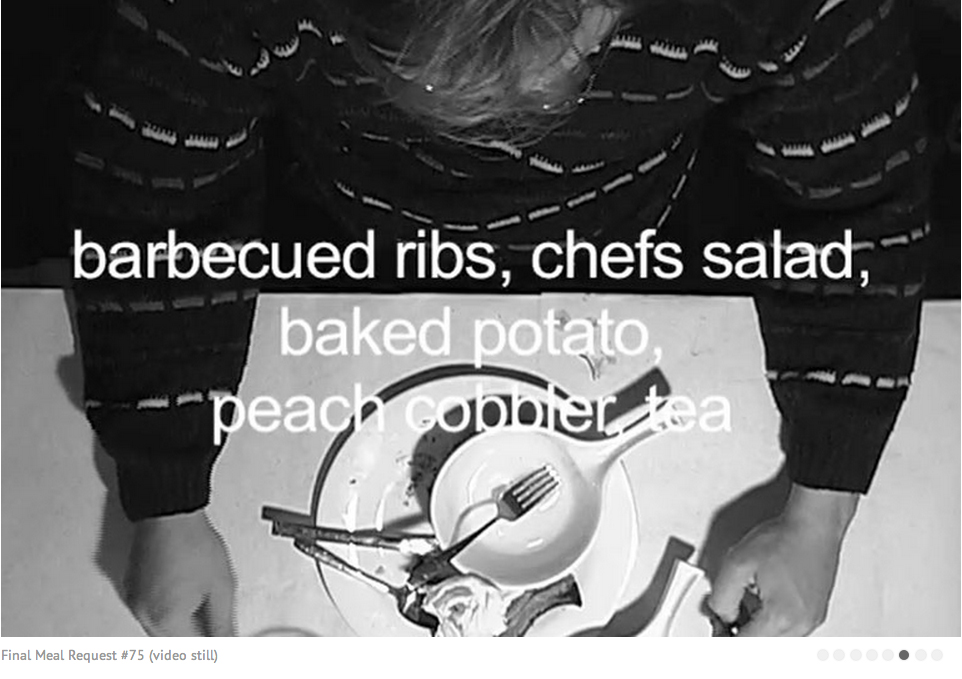
Read MoreIn Human Nature and Conduct (1922), American philosopher John Dewey writes, “By killing an evil-doer or shutting him up behind stone walls, we are enabled to forget both him and our part in creating him. Society excuses itself by laying the blame on the criminal.”1 In this statement, Dewey emphasizes society’s tendency to vilify the convict, an act which both absolves others from their role—indirect, institutional, or otherwise—in the creation of criminals, and effectively excludes the criminal from society.
Today there are over 200,000 people in federal prisons and over one million in state prisons in America.2
Read MoreThis essay was written in conjunction with Margaret Cogswell's RIVER FUGUES: Moving the Water(s), on view at CUE Art Foundation April 26 - May 31, 2014.
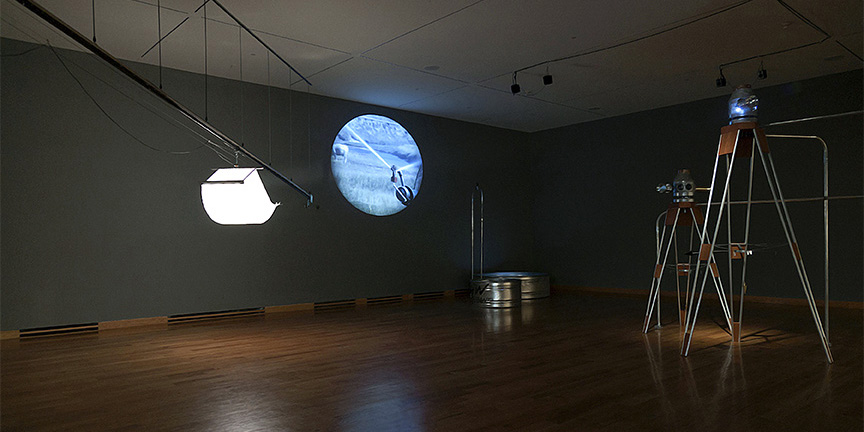
Margaret Cogswell’s two installations—Moving the Water(s): Ashokan Fugues (2014) and Moving the Water(s): Wyoming River Fugues(2012)—play sound and image off one another to show the social and physical effects of water’s commodification on the land and citizens of the United States. Drawing on documents, interviews and historical records from the past hundred years in New York and Wyoming, these works present an immersive visual and aural score regulated by a metronomic beat.
Read MoreWalking through one of Graem Whyte’s exhibitions is an adventure. On the walls might hang an assortment of curious objects that seem to resemble misshapen billiard sticks or wobbly tennis rackets. They may appear alongside of ping-pong tables that are so drastically reconfigured as to suggest entirely new gaming equipment. There might be musical instruments that seem to belong to Dr. Seuss’s world. Occasionally, Whyte even includes space-age pods into which you might climb for a few magical moments.
Read MoreAlfredo Gisholt’s paintings are never one thing. Like the 20th-century Moderns preceding him, Gisholt resists precise categorization of aesthetic, conceit or even nationality. His work, ranging from figuration to hyper-abstraction and back, is marked by a transformative restlessness fraught with literal and symbolic forms.
Read More“Nothing is more abstract than reality,” according to Giorgio Morandi. The work and practice of the artists named galería perdida investigates the kind of volatility that surfaces precisely in situations that seem transparent. Labor, for example, is a prominent subject for the collective; it represents a way for the artists to acknowledge (even to champion) the effort and creativity involved in the production and design of common objects, cajoling the viewer to look beyond the obvious, beyond the “real.”
Read More